



The Golden Rule: Store Vinyl Records Upright
The Physics of Warping
- Pressure: Vinyl is surprisingly heavy. Stack 20 records flat and the bottom one carries nearly 10 pounds of weight. Over time, that pressure presses the vinyl into the sleeve, causing ring wear — those circular marks that appear on album covers.
- Warping: Even worse, the weight can cause the records themselves to warp, especially if room temperatures fluctuate. Once a record is warped, it is often impossible to restore.
- The solution: Store records upright, like books on a shelf, perfectly vertical.
Avoid the “Leaning Effect”
- When a shelf is only half full, records naturally slide and tilt at a 30–45° angle. Over months, this constant sideways pressure can cause gradual warping.
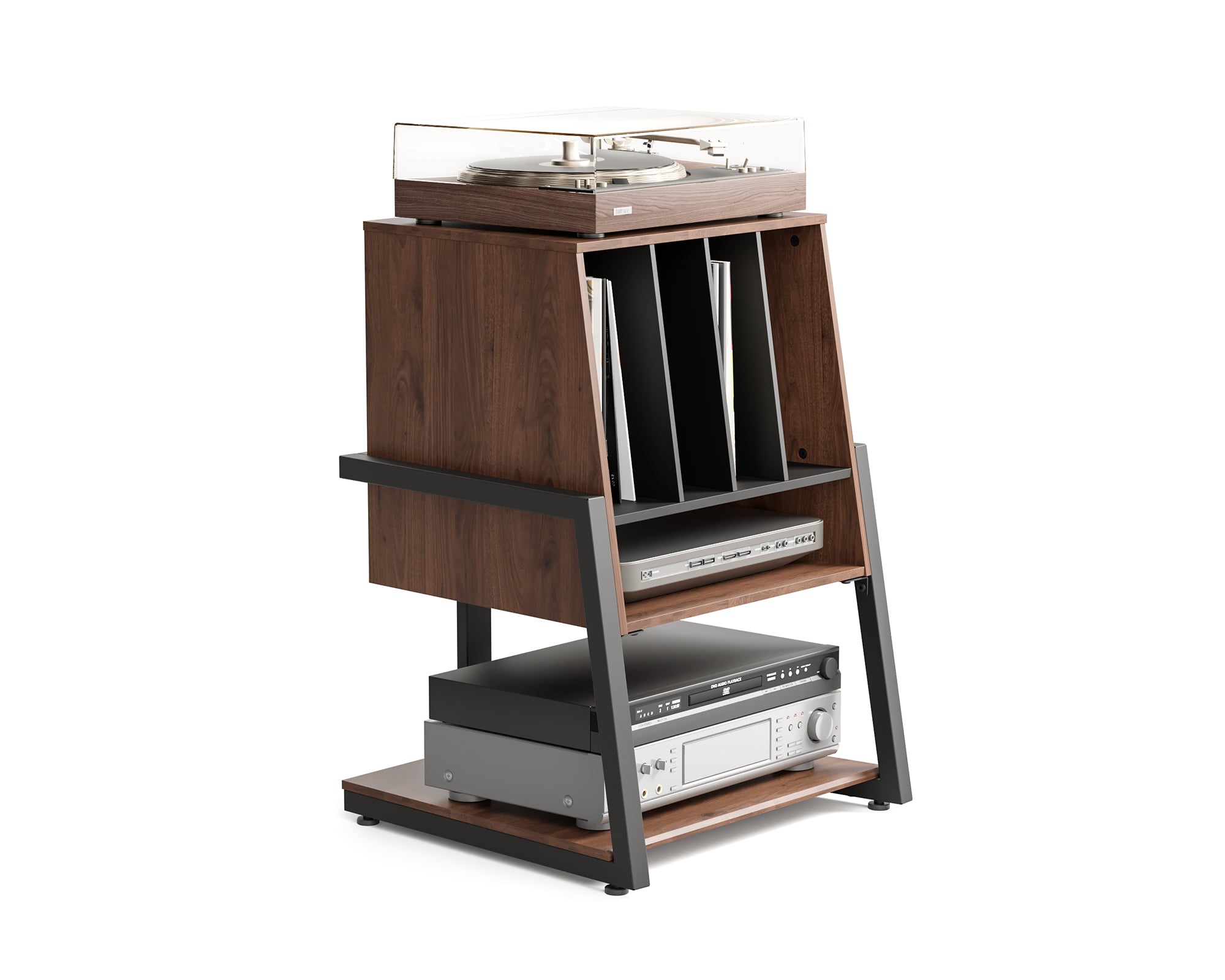
- The fix: Provide structural support. Use sturdy bookends or choose a record player stand with built-in dividers, such as those from the FITUEYES Eiffel Series. Dividers act as structural brakes, keeping albums perfectly upright even when the shelf isn’t fully loaded.

Choosing the Right Furniture: The 35-Pound Rule
Understanding Weight Density and Capacity
- The risk: Standard particleboard shelving is designed for paperbacks or photo frames, not heavy vinyl. It lacks the structural integrity to support hundreds of pounds long term.
- The solution: You need reinforced furniture. A quality record player stand should feature a metal frame, steel supports, or thick high-density wooden shelves specifically engineered to handle the weight of a vinyl collection.
- Around 60–70 LPs fit within 30 cm of shelf space.
- Weight allowance: Calculate approximately 35 pounds per foot of records.
- Pro tip: Always leave around 15% free space. Packing sleeves too tightly increases the risk of damage when pulling records out.
The Depth Problem (Overhang)
- The risk: On a shallow shelf, your records will overhang by around 5 cm. This exposes sleeve edges to knocks, spills, lively children, and pets.
- The solution: Ensure your furniture is at least 33 cm deep. A dedicated record player stand with storage fully supports the sleeve, protects the corners from damage, and gives your setup a clean, tailored appearance.
Vinyl Record Storage: “Active” vs. “Archived”
Zone A: The Archive (Spine-Out)
- Organisation: Arrange alphabetically, by genre, or by year.
- Storage method: Store spine-out to maximise density and keep the centre of gravity low, helping maintain stability.
Zone B: The “Now Playing” Display (Face-Out)
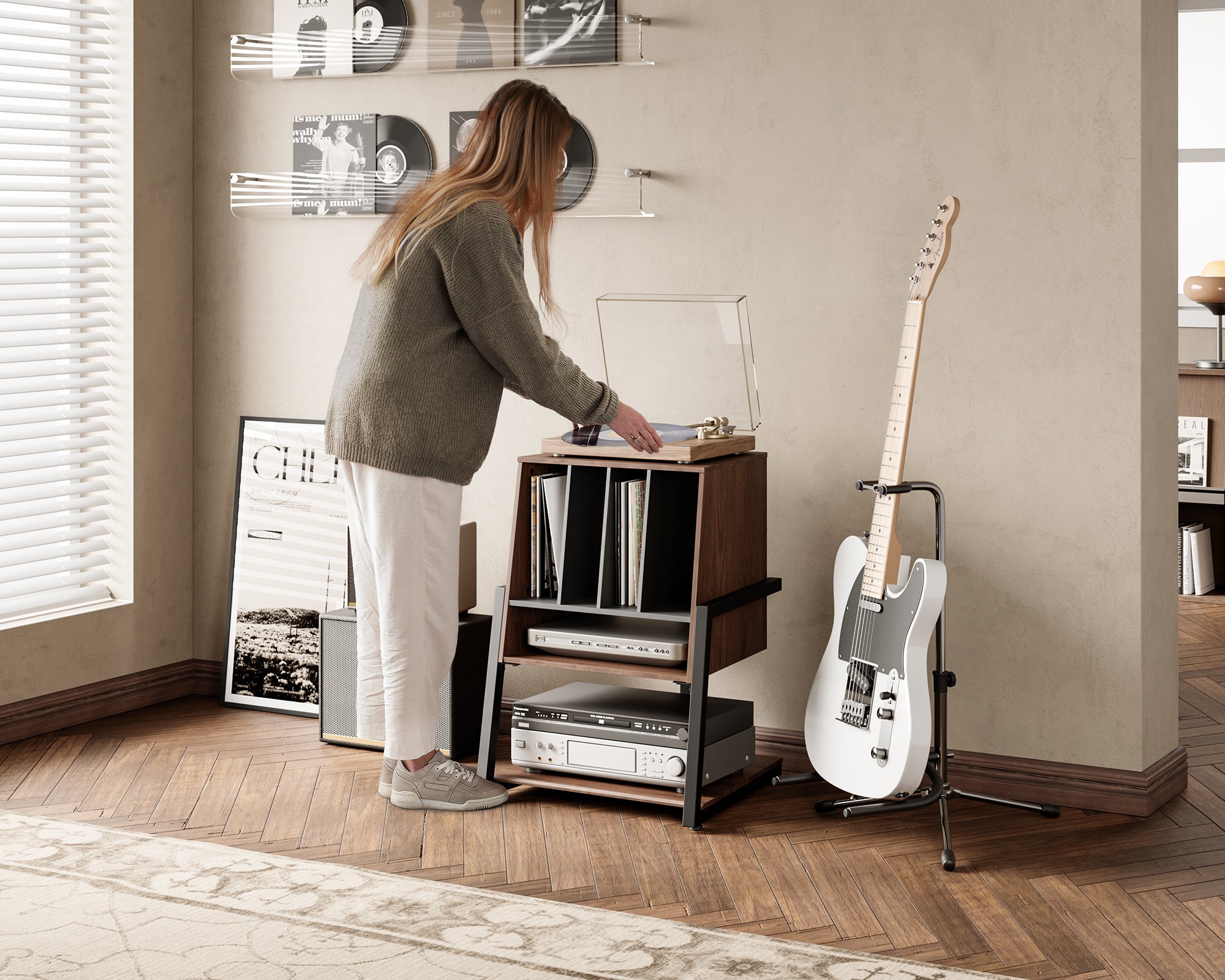
- Setup: Use the top level of your stand or a dedicated display ledge to showcase albums.
- The benefit: Keep 5–10 favourite albums of the week within easy reach. It also turns album covers into a rotating gallery feature for your room. Seeing the artwork regularly may inspire you to revisit music you’d otherwise forget.

The “Audio Ecosystem”: Cables and Vibrations
Vibration Isolation
- Tip: Use a solid, heavy record player stand. Mass absorbs vibration. Ideally, your stand should have separate levels — one for the amplifier (bottom), one for vinyl storage (middle), and the top platform reserved exclusively for the turntable. If speakers must share the surface, use isolation pads underneath.
Managing “Spaghetti” Cables
- The look: Nothing ruins an elegant listening corner faster than tangled cables behind the stand. It makes the space feel cluttered and stressful.
- The solution: Effective cable management is essential for a clean, minimalist aesthetic. Record player stands from FITUEYES can be paired with cable management accessories to discreetly conceal wiring behind the frame. Bundling cables keeps the focus on your music and artwork — not on messy wires.
How to Store Vinyl Records Properly: A Step-by-Step Guide
Step 1: The Inner and Outer Defence
- Inner sleeves: Replace cheap paper sleeves with anti-static “rice paper” or polyethylene-lined inner sleeves.
- Outer sleeves: Place the album jacket inside a clear 3-mil plastic outer sleeve. This prevents shelf wear when sliding records in and out of storage.
Step 2: Check Your Environment
- Heat: Never place your stand near a radiator, heating vent, or fireplace. Vinyl begins to warp at around 60°C (140°F), but prolonged exposure to lower heat can also cause damage over time.
- Sunlight: Avoid direct sunlight. UV rays fade album artwork, and solar heat can warp records inside their sleeves.
- Humidity: Avoid damp basements. Moisture encourages mould growth on cardboard sleeves. A typical living room temperature (18–21°C) is ideal.
Step 3: Align and Adjust
- Place your records vertically on the shelf.
- The “Goldilocks” fit: Don’t pack them so tightly that they’re difficult to remove (this causes ring wear). Don’t leave them so loose that they lean heavily. Use dividers in your record player stand to keep them upright while allowing airflow.

Frequently Asked Questions
Q: Can I stack vinyl records flat if it’s only temporary?
A: We strongly advise against it. Even short-term stacking can trap dust in the grooves or lead to warping if the room becomes warm. Always store records upright — even temporarily.
Q: Do I really need a dedicated stand, or will a bookcase do?
A: For a very small collection (under 50 records), a sturdy and sufficiently deep bookcase may suffice. For larger collections, however, the weight becomes a structural risk. A dedicated record player stand is reinforced to support heavy loads without sagging or tipping.
Q: Should I clean records before storing them?
A: Yes. Storing a dirty record allows dust to settle into the grooves and become embedded over time. Make it a habit to use a carbon fibre brush before and after playing.
Q: Can I leave a record on the turntable overnight?
A: Occasionally, yes. But leaving it exposed for days allows dust to accumulate, affecting sound quality next time you play it. It’s always best to return it to its sleeve and store it upright when finished.
Summary
If you treat your records with respect, they can outlast you.
Vinyl is one of the few formats that can endure for generations when properly cared for. By investing in quality sleeves and a sturdy, purpose-built record player stand, you’re not just storing plastic discs — you’re preserving the soundtrack of your life.
Looking to create your own listening space? Explore the range of record player stands from FITUEYES and discover the perfect balance of durability and contemporary British design for your vinyl collection.